
Worship Guitar Tone: How to Hear a Pickup Demo in Your Own Context
I've been chasing tone for the better part of ten years now, and I'll let you in on a secret I wish somebody had told me when I was younger: a tone demo isn't a promise. It's part of an ingredient list.

Worship Guitar Tone: How to Hear a Pickup Demo in Your Own Context
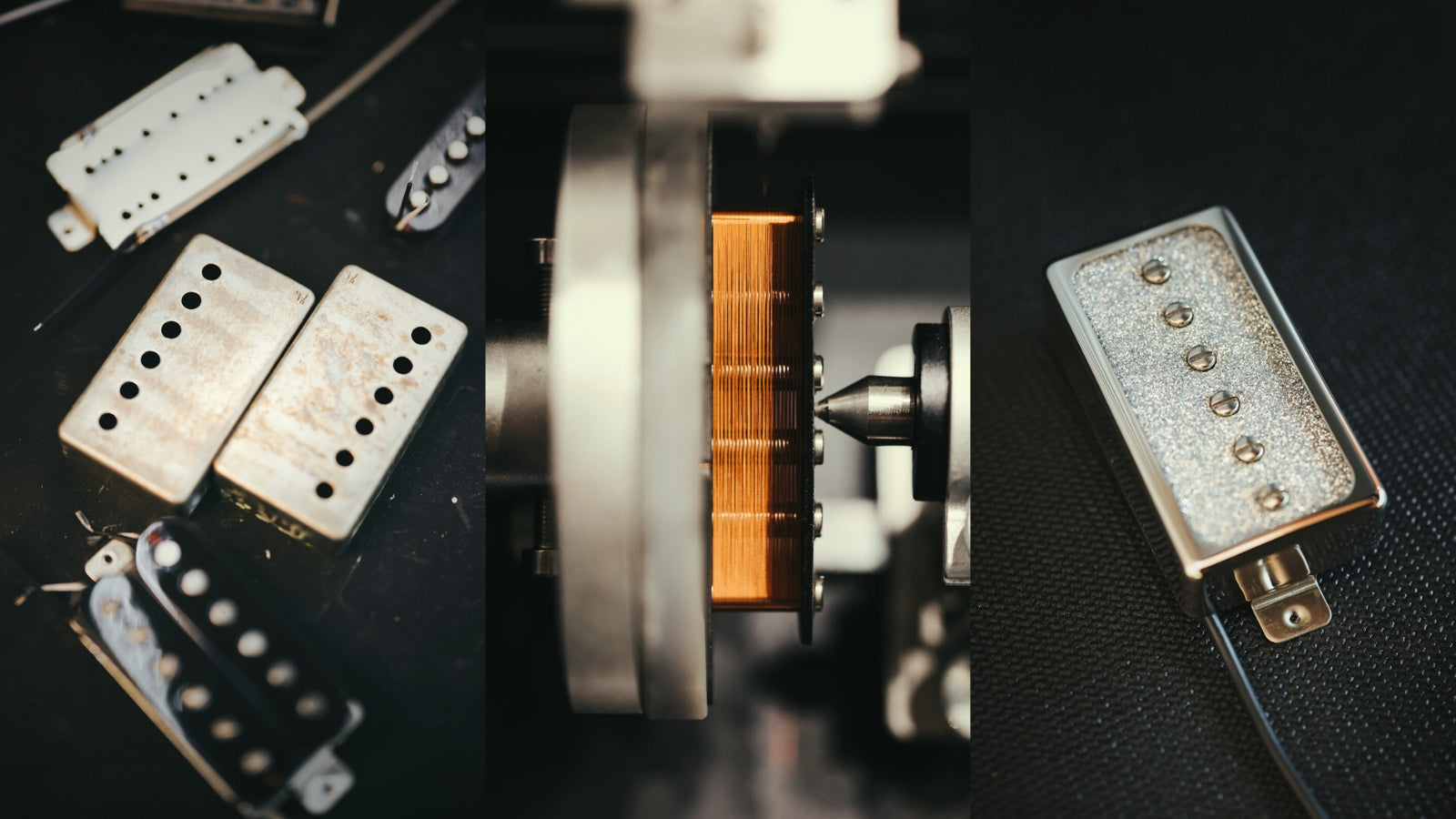
We treat demos like they're the finished meal. We click play, we listen for a couple of seconds, and somewhere in the back of our brains a little voice says, "yep, that's the sound" or "nope, not for me," and we move on. But here's what I've learned from years on the bench building pickups and a lot more years standing on stages.. the demo you're hearing was cooked in somebody else's kitchen. Their amp(s). Their room. Their hands. Their pedalboard. Their mic, sitting three feet back on a hardwood floor. None of that is exactly your Sunday morning experience.
If you play worship or CCM, this matters more for you than for almost anybody else. Stick with me.
A demo is recorded to be "fair." Your rig is anything but.
Most tone demos are intentionally recorded to be neutral. A clean-ish amp, a touch of reverb, played dry so you can "here's my clean tone." Don't get me wrong, I totally get why. I want to be honest about what a pickup is doing on its own, with nothing to hide it. We don't take tone here at Lambertones Pickups. But honest and useful aren't the same thing, because you have never once walked up on a Sunday and played a naked, dry tone in front of your church.
For my house of worship players, we produce e a wall of sound from a single instrument. Big reverb(s), maybe some shimmer riding on top. A quarter note AND dotted-eighth delay ticking feeding into that cloud of verb. A volume pedal under your foot for swells. A drive or few you stack as the bridge builds and repeats. Pads from the keyboard player fill every crack in the frequency spectrum. A click in your in-ears and a worship leader watching for that dynamic lift into the last chorus. That is your context. And every single one of those layers changes what a pickup actually gives you.
So the real skill isn't "do I like this exact sound?" The skill is "can I hear the raw ingredients I need - and will they survive everything I'm about to pour on top of them?"
The four things to listen for (in any demo, mine or anyone's)
When I'm evaluating a pickup for a player, or voicing one on the bench, I'm really only listening for four things. You can carry these four ears into any demo on the internet.
1. Clarity and note separation. Listen to a big, open, suspended add9 — the bread and butter of worship voicings — and notice whether you can still hear each string as its own voice. This is the very first thing to die when you stack reverb and delay. If a pickup sounds congested or muddy when it's dry, it's going to turn into oatmeal the second you wash it. If it's clear and articulate dry, it has somewhere to bloom.
2. Dynamic response. How does the pickup react when you back off your pick attack versus when you dig in? Worship guitar lives and dies on dynamics — the distance between a whisper-quiet intro and a full-throated final chorus is mostly in your hands, not your knobs. A touch-sensitive pickup lets your fingers do the volume work, so you're not white-knuckling the volume pot the whole song.
3. Behavior at the edges. What happens when you push it? When you stack a transparent overdrive on top? Does it stay smooth and musical, or does it go brittle and harsh up top? Harshness is the enemy of a worship tone because it's the one thing reverb and delay will amplify rather than hide.
4. Position-to-position consistency. This one is criminally overlooked. If your neck pickup is way quieter than your bridge, every time you switch mid-song, you get an amplitude jump — and that's a real problem when both hands are busy, and your foot is already on a swell pedal. The less your tone lurches between positions, the more you can just play.
Now — let's listen in context.
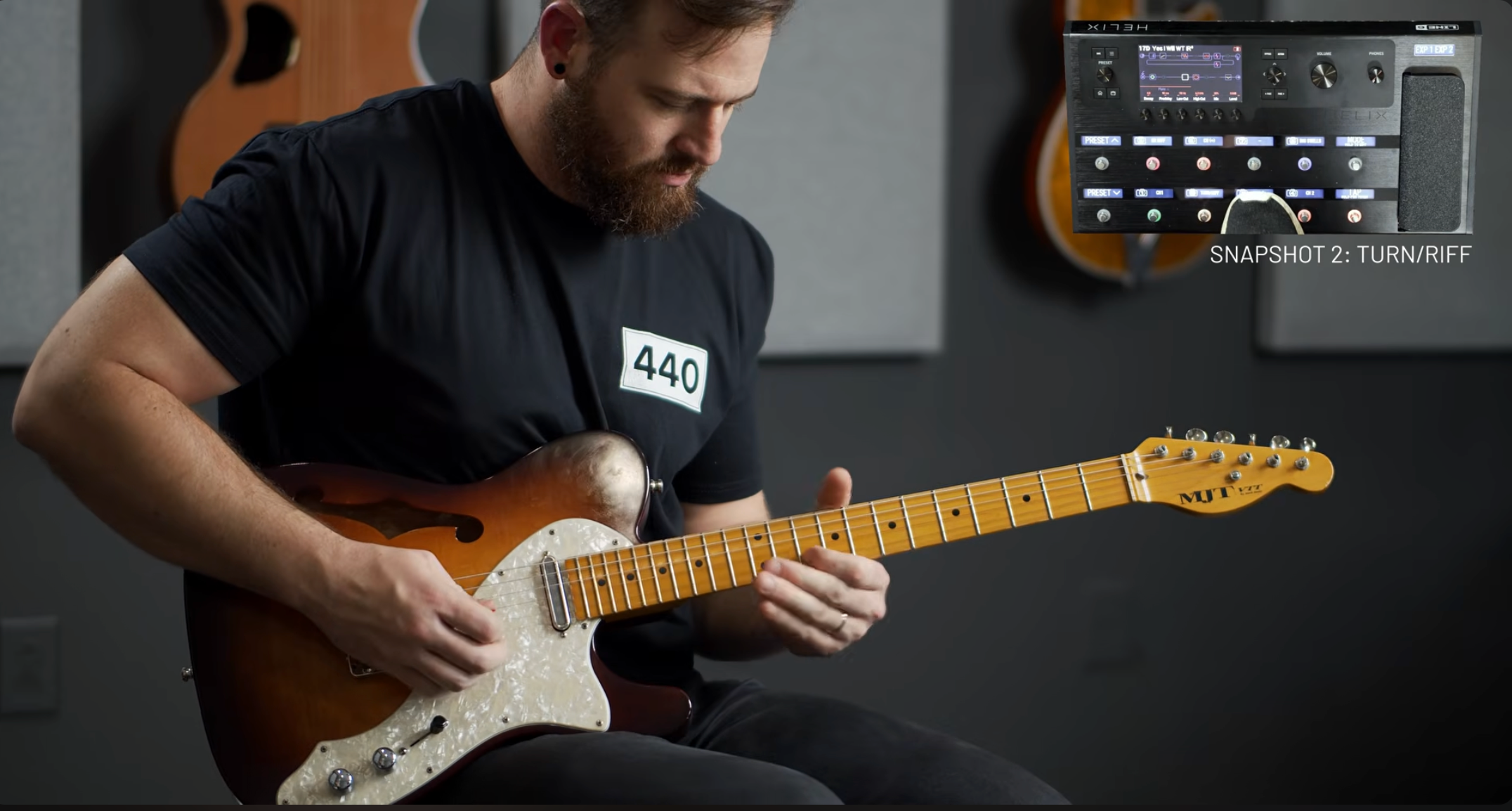
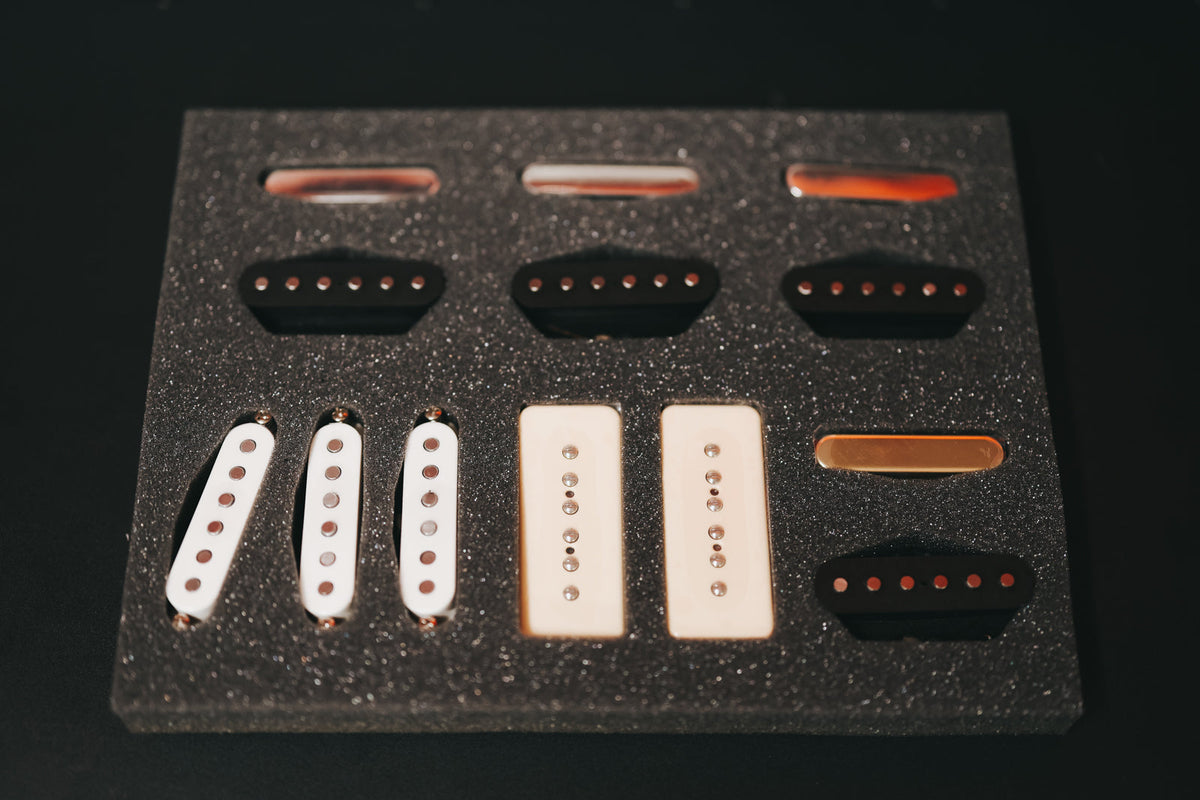
Here's where I get to cheat a little and hand you a demo that's already most of the way translated into your world. This is "the Blondie," our T-style set, played in a worship and CCM setting: ambient, dynamic, sitting in a musical context that looks a whole lot more like your Sunday than a dry bench test ever could.
Watch it once just to enjoy it. Then watch it again with those four ears on.
Listen to the note separation in the those first 60 seconds. Each chord stays open and articulate even as the ambiance builds up around them. Listen to how the dynamics breathe; you can hear the Bradford pull back and then lean in, and the pickup tracks every bit of it. Listen for the top end when it gets pushed, there's chime and air up there, but it never turns into ice picks. And notice how little the tone jumps when the switch positions change.
That's not an accident. That's exactly what we voiced the Blondie to do.
Why the Blondie speaks worship fluently
I named our pickup lines after coffee on purpose — the Crema, the Grinder, the Red Eye, the Ristretto. Some days you want a dark roast that punches you in the chest. But sometimes a dark roast is just a little too much, and what you really want is that "mmm, yes, that's good" cup — mellow, light, but still powerfully flavorful. That's the Blondie.
In worship terms, here's what that actually translates to. The bridge is slightly overwound with a custom wire pairing, so when the song lifts and you need a lead line to cut through a wall of pads and reverb, it's bold and present without ever getting shrill. The neck is warm and soulful but carries a little more high-end than a traditional Tele neck, so your verse rhythm stays clear and chimey instead of disappearing into the low-mid soup of a full band. And we deliberately voiced very little volume variance between the neck and the bridge so you spend less time turning knobs and more time feeling the dynamic opportunities to be creative. On a Saturday/Sunday, that means less time managing your gear and more time actually leading your instrument in its beautiful context.
We build for clarity and dynamics above everything else, because those are the two qualities that let a tone survive the journey — from your fingers, through your pedalboard, into the room, and into the heart of whoever's singing along. A muddy, over-compressed pickup falls apart under that kind of pressure. A clear, dynamic one only gets better the more you ask of it.
The translation, in one sentence
A great demo doesn't tell you what a pickup will sound like in your hands. It tells you what the pickup is, and then it's your job to imagine it through your amp, your room, your studio, and for some of you, your worship set.
So the next time you watch a tone demo, mine, or anybody's, pump the brakes on the clean tone being the critical factor. Ask "do I hear the clarity, the dynamics, the smoothness, and the consistency I need for my context?" If you do, you've found a pickup that will translate. If you don't, no amount of effects is going to put it there for you.
The Blondie translates. Watch the demo one more time, picture your Sunday stacked on top of it, and I think you'll hear exactly what I mean.
Blessings and peace to you all,
- Kurtis @ Lambertones

Written by Kurtis Lamberton

Leave a comment
This site is protected by hCaptcha and the hCaptcha Privacy Policy and Terms of Service apply.